

Key points
- A part sent for repair is declared under temporary export before it leaves, not as a definitive export.
- Serial numbers, photos and a data sheet let customs recognise the same part when it comes back.
- On return, duties are in principle charged on the repair rather than on the full value of the part, under the regulations in force.
- A part shipped without a temporary export declaration may be treated as a new import when it returns.
Which customs procedure for a repair abroad?
To send a machine or a part for repair outside Guinea, it must be declared under temporary export, before shipment, with customs through a licensed customs broker. This declaration records the part, its identification and the reason it is leaving. On return, the part is re-imported with reference to that declaration, and duties are in principle charged on the value of the repair rather than on the full value of the part, under the regulations in force.
This mechanism is often called outward processing: the goods leave to undergo an operation (repair, overhaul, reconditioning) and then come back. If the part leaves under an ordinary export instead, nothing proves to customs, on return, that it is the same equipment: it may be treated as a new import, with duties and taxes calculated on its full value.
The exact conditions (permitted duration, any guarantee, basis for duties on return) depend on the regulations in force and the decision of customs. Have them confirmed before shipment.
Identifying the part before it leaves
On return, customs checks that the same part is coming back. That proof is prepared before shipment, and it must be readable by someone who has never seen the equipment.
- Record the make, model, serial number and, where relevant, the engine, chassis or OEM part numbers.
- Photograph the identification plate, the stamped or engraved numbers, and the part from several angles, with the packing open.
- Attach the data sheet or an extract from the manufacturer's catalogue.
- Keep the diagnostic or failure report that justifies sending it for repair.
- State a value for the part in its current condition, consistent with what you declare.
Put exactly the same numbers on the pro forma invoice, the packing list, the transport document and the declaration. A single different digit can block the re-import.
Documents for departure
- The temporary export declaration, lodged on SYDONIA by the licensed customs broker.
- A pro forma invoice or no-charge invoice describing the part and its value in its current condition, and stating the reason: sent for repair, return planned.
- The quotation or repair agreement from the foreign workshop, where one already exists.
- The packing list, with weights, dimensions and number of packages.
- The identification details: serial numbers, photos, data sheet.
- The transport document: bill of lading (B/L) for sea, air waybill (AWB) for air.
- Where applicable, the guarantee or re-import undertaking required by customs.
Shipping the part: sea or air
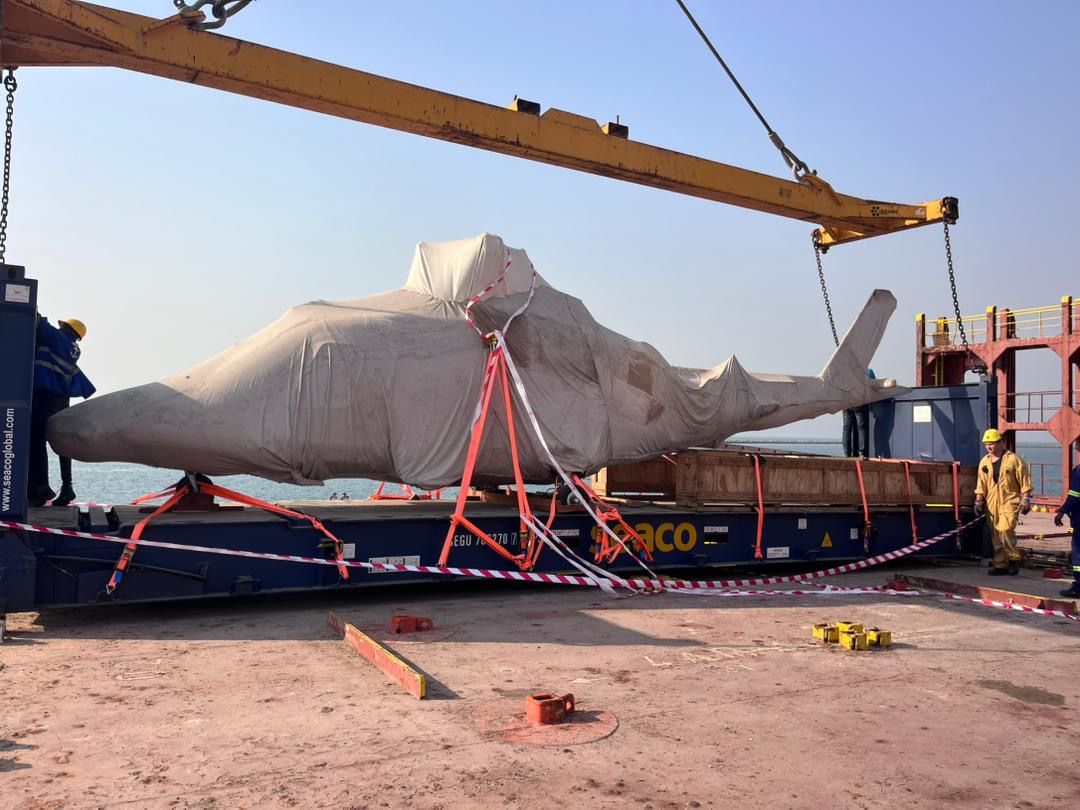
The choice depends on weight, urgency and the cost of the machine standing idle. A small critical part often goes by air; an engine, an axle or a complete machine goes by sea, in a container, on a flat rack or as break bulk.
- Packing: a suitable crate or pallet, the part protected from moisture and corrosion, lifting points marked.
- Fluids: drain oils and fuel and declare batteries; some items fall under dangerous goods rules, especially by air.
- Insurance: the part travels twice; cover both legs at its real value.
- Incoterm: agree with the workshop who arranges and pays for the return transport, and at what point the part changes hands.
On return: re-import
The repaired part comes back under a re-import declaration that cites the temporary export declaration. Customs matches the serial numbers and photos, then calculates what is due.
- Ask the workshop for a detailed repair invoice: labour and replaced parts on separate lines. This is the usual basis for duties on return.
- If the repair is done under warranty, have a warranty statement and a nil or nominal value invoice issued; the customs treatment is confirmed with your broker.
- If the workshop sends you a standard exchange unit instead of your own part, say so before the return: it is no longer the same part, and the treatment may differ.
- Respect the permitted duration: beyond it, or without a request for extension, the re-import may be refused the benefit of the procedure.
VAT at 18% and the other levies apply, under the regulations in force, on the basis set by customs. The exact amount is the one on the assessment (liquidation).
Mistakes to avoid
- Sending the part with a passenger or by express courier without a temporary export declaration.
- Declaring a vague description ("mechanical parts") with no serial number.
- Accepting a lump-sum repair invoice with no split between labour and parts.
- Forgetting to plan the return transport and insurance when sending.
- Letting the workshop ship the return to an address or consignee different from the original exporter.
What we do for you
TransXpress prepares the temporary export declaration, arranges shipment by sea or air with our partner agents, follows the repair and clears the part on its return to Conakry, then delivers it to your site. Send us the description of the part, its serial numbers, photos and the workshop's details.
Frequently asked questions
Do you pay customs duties when a repaired part comes back to Guinea?
In principle, duties are charged on the value of the repair, not on the full value of the part, provided it left under temporary export and is recognised on return. The exact conditions are set by the regulations in force.
Can the part be sent as an ordinary export and declared on return?
It is risky: without a temporary export declaration, customs may treat the return as a new import, with duties on the full value.
What if the workshop replaces the part with a new one?
Say so before the return. An exchange unit is not the exported part, and the customs treatment may differ: have it confirmed with your broker.
General information guide written by TransXpress. Customs rules and procedures change: every file is checked against the documents and the regulations in force.
A part to send for repair? Send us its description, serial numbers, photos and the repair shop's details. We call you back within 24 business hours.