

Key points
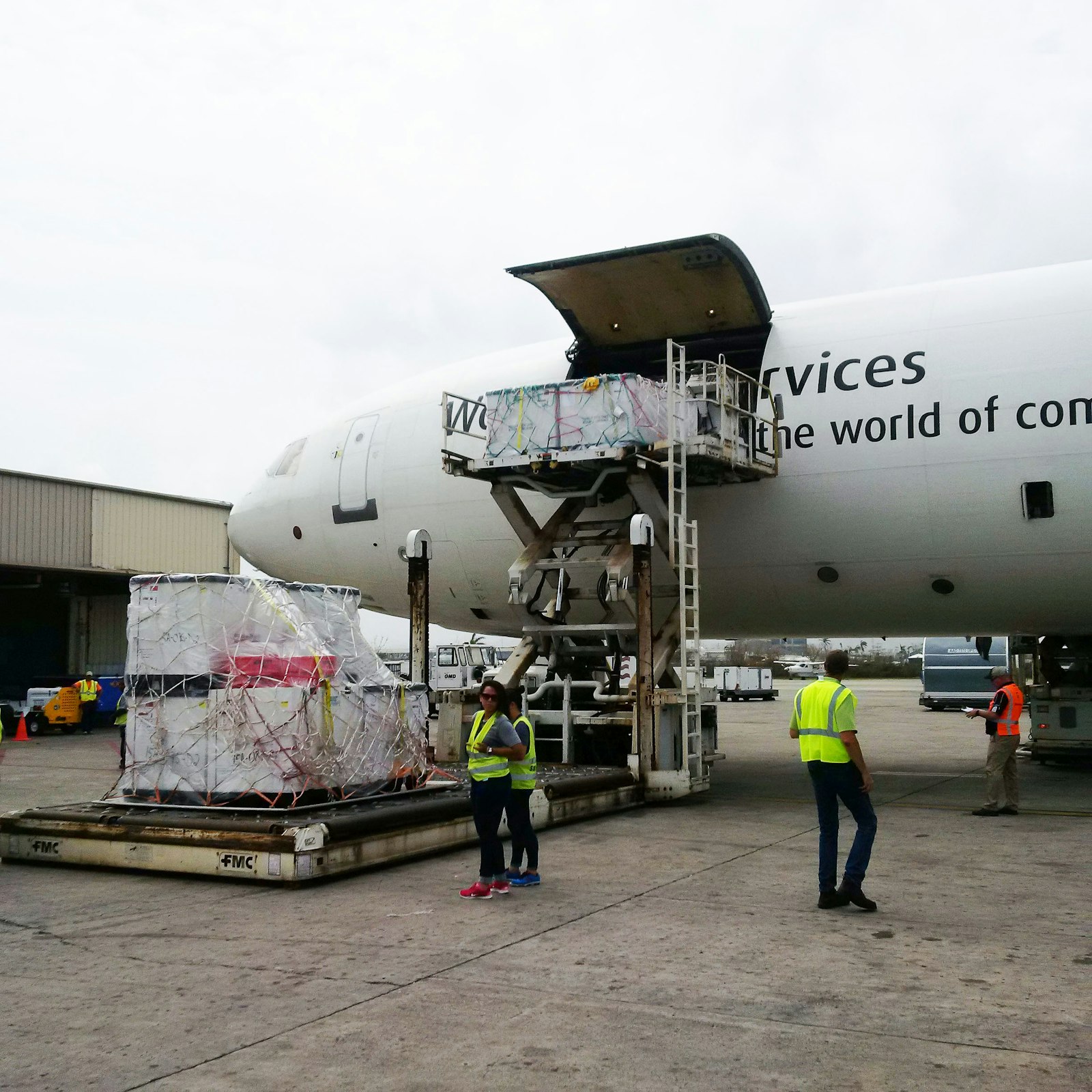
- On arrival, the goods are unloaded and placed in the airport cargo warehouse, under customs control, until they are cleared.
- The air waybill (AWB, or LTA in French) is the key document: it identifies the shipment and its consignee, and must match the invoice and the packing list.
- After the free period, the warehouse charges for storage: preparing the declaration before the flight arrives limits these charges.
- Dangerous goods follow strict rules from the moment of shipment, and express parcels follow a different channel from standard air freight.
How is an air shipment cleared through customs?
On arrival at Conakry airport, the shipment is unloaded and placed in the cargo warehouse, under customs control. The customs broker collects the documents (air waybill, invoice, packing list), lodges the declaration in the customs computer system, has the assessed duties and taxes paid, then obtains authorisation to remove the goods. It then pays the warehouse charges and collects the shipment for delivery.
The principle is the same as at the port, but the pace is faster: an air shipment arrives shortly after departure, and storage at the warehouse becomes chargeable soon after the free period. Everything depends on preparation.
The air waybill (AWB)
The air waybill, called AWB in English and LTA in French, is the transport document for air freight. It is issued by the airline or by the forwarder organising the shipment. Unlike the ocean bill of lading (B/L), it is generally not a document of title: the goods are released to the consignee named on the AWB.
- Master AWB: issued by the airline to the forwarder, for a set of consolidated shipments.
- House AWB: issued by the forwarder for each individual shipment in the consolidation.
- The consignee, description, number of packages and weight must match the commercial invoice and the packing list.
Check the consignee's name and address on the AWB before departure: an error at this stage complicates and delays collection in Conakry.
From the cargo warehouse to the release order
- Flight arrival and unloading: the shipment is taken in by the cargo warehouse and recorded.
- Arrival notice to the consignee or its customs broker, with the AWB number.
- Lodging of the customs declaration, prepared from the invoice, packing list, AWB and any other documents required for the goods.
- Possible customs inspection (documentary or physical), then assessment of duties and taxes.
- Payment of duties and taxes, and issue of the removal authorisation.
- Payment of warehouse and handling charges, then collection and delivery.
Duties and taxes are calculated as for any import: on the customs value of the goods, according to their classification in the ECOWAS Common External Tariff (CET), with VAT at 18 % in principle, unless an exemption applies. For air freight, the cost of air transport is part of the customs value, which can weigh on heavy shipments.
Depending on the nature of the goods, other documents may be required: certificate of origin, technical data sheet, prior authorisation from a ministry for certain regulated products, or an exemption certificate if your project benefits from one. Check the list with your customs broker before shipment, because a missing document holds the shipment in the warehouse while it is obtained.
Storage: why every day counts
The cargo warehouse grants a free period after arrival. After that, it charges for storage, often by weight and duration. As air shipments arrive quickly, a file that is incomplete on the day of arrival translates directly into charges.
- Send the invoice, packing list and AWB to your customs broker as soon as the goods ship, before the flight arrives.
- Check that the description and value are clear and consistent across all documents.
- Arrange funding for duties and taxes before arrival.
- Track the actual flight, not just the planned one: a shipment can be transhipped or delayed.
Dangerous goods: strict rules
Lithium batteries, aerosols, paints, certain chemicals, compressed gases: many goods common on a work site are classified as dangerous for air transport. They fall under the international regulations on the carriage of dangerous goods by air, applied by the airlines: classification, approved packaging, labelling and the shipper's declaration.
These rules apply from shipment, at the supplier's premises. Some goods are accepted only on cargo aircraft, others are forbidden by air. On arrival, they may be stored in a dedicated area and require additional documents. Always state the exact nature of the goods before shipment.
Express courier or air freight: what is the difference?
Express courier companies handle the shipment door to door, with their own channel at the airport and often their own customs clearance. This is convenient for small parcels and documents. For heavier, bulkier or high-value shipments, standard air freight organised by a forwarder is generally more suitable and leaves you the choice of customs broker in Conakry.
- Express: small parcels, documents, samples; integrated service, less control over the declaration.
- Air freight: heavy or numerous packages, machine parts, equipment; AWB, cargo warehouse and declaration by your customs broker.
In both cases, duties and taxes remain payable under the regulations in force. An express shipment is not exempt simply because of how it is transported.
What we do for you
TransXpress organises pickup from your suppliers through partner agents, shipment by air to Conakry, declaration and customs clearance at the airport, then delivery to your site. Duties, taxes and warehouse charges are re-invoiced to you at actual cost, with their receipts. Send us the supplier's invoice, the packing list, and the weight and dimensions of the packages.
Frequently asked questions
Is the AWB a document of title like the B/L?
Generally not: the goods are released to the consignee named on the AWB, without presenting an original.
Is the cost of air transport included in the duty calculation?
Yes, the customs value in principle includes freight and insurance up to the place of import.
Can lithium batteries be shipped by air?
Yes in some cases, under the regulations on the carriage of dangerous goods by air: specific packaging, labelling and declaration. Some configurations are restricted to cargo aircraft.
General information guide written by TransXpress. Customs rules and procedures change: every file is checked against the documents and the regulations in force.
An air shipment to clear in Conakry? Send us the air waybill, the supplier's invoice, the packing list, and the weight and dimensions of the packages. We call you back within 24 business hours.