

Key points
- Heavy and out-of-gauge deliveries inland are best scheduled before the heavy rains.
- Goods that are well packed and covered, on a truck in good condition, avoid most water damage.
- Schedules must include a margin for damaged roads, weakened bridges and crossings.
- Site access is checked before each departure, not when the truck arrives.
What does the rainy season change for logistics?
The rainy season lengthens transport times, makes some access routes difficult or impassable and exposes goods to water: to adapt, bring heavy deliveries forward, strengthen packing and load protection, build margins into schedules and check site access before each departure. In Guinea, the rains generally fall in the second part of the year, with an intensity and duration that vary widely by region, Maritime Guinea and Forest Guinea being among the wettest.
The effects add up: a damaged road slows the trucks, a stranded truck blocks a convoy, and a late convoy delays unstuffing and the return of empty containers, with detention charges as a result.
Roads and tracks
- Paved routes generally remain passable, but potholes, subsidence and flooded stretches multiply and reduce speed.
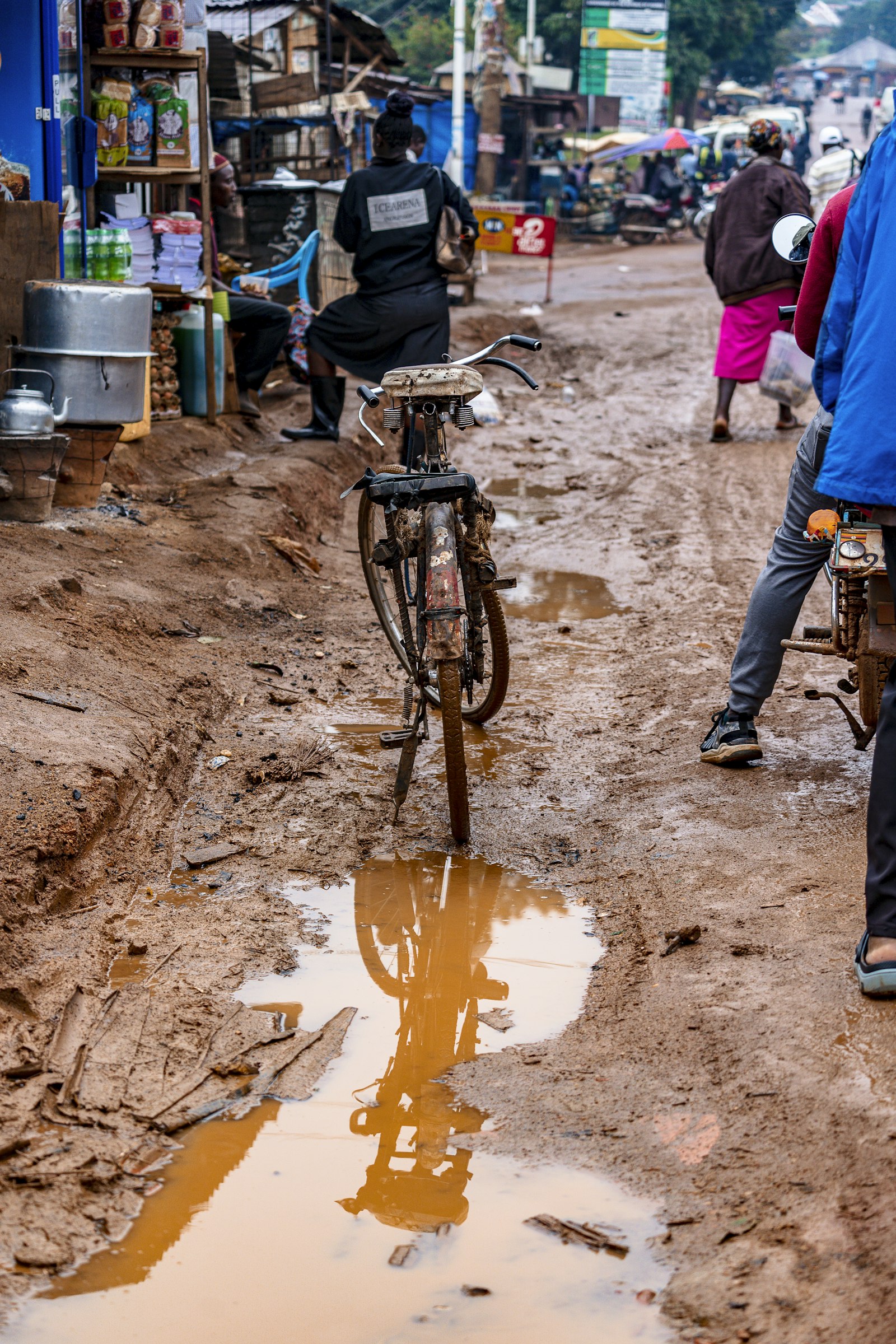
- Laterite tracks to mine sites, quarries and construction sites become slippery and rutted under heavy trucks.
- Steep climbs and descents are the most sensitive points for a loaded truck, especially a lowbed.
- Visibility drops in heavy downpours: night driving becomes riskier and should be limited.
Before each shipment, it is useful to collect recent information on the route from drivers who have just driven it and from the destination site's teams.
Protecting the goods: packing and tarpaulins
- Require the supplier to use packing suited to a humid tropical climate: film, waterproof bags, treated crates, desiccants for electrical and electronic equipment.
- Always cover loads on flatbeds and semi-trailers, with tarpaulins in good condition and well strapped, checking them at every stop.
- Raise packages off the ground at the port and on site (pallets, timber) to avoid standing water.
- For cement, bags of sensitive products or spare parts, prefer a closed container where possible.
- Check the condition of containers (seals, roof, doors) before stuffing or delivery.
Damage caused by insufficient packing is often excluded from cargo insurance policies. Good packing therefore also protects your claim in case of damage.
Planning with margins
Dry-season journey times are not a good planning basis during the rains. It is better to build the schedule backwards from the date the goods are needed on site, adding a margin at each step.
- Bring forward orders and shipments of critical materials and parts to build a safety stock on site before the heavy rains.
- Schedule heavy and out-of-gauge loads before the season, or during drier spells, when tracks and structures allow.
- Build a margin into the delivery times you announce to your own customers or teams.
- Where possible, negotiate a longer detention free time with the shipping line for containers going inland.
- Keep fallback options: alternative route, secure intermediate storage, split delivery.
Bridges, ferries and crossings
Heavy rains can weaken structures, raise river levels and disrupt ferry crossings on some routes. For a heavy convoy, the real capacity of a bridge or ford must be confirmed before departure, based on information from the competent authorities and a route survey.
- Have the route surveyed before an abnormal load, especially bridges and low crossings.
- Never drive a truck onto a submerged road or a ford covered with water.
- Check ferry schedules and capacity where the route includes one.
Site access and unloading
The last kilometre is often the hardest. A soaked access track, a muddy unloading area or a crane that cannot set up will immobilise a truck while charges run.
- Have the site confirm, before departure, the condition of the access track and unloading area.
- Plan a towing or assistance machine on difficult access routes.
- Check that the ground can bear the outriggers of the crane or the unloading forklift.
- Schedule unloading in daylight and make sure the receiving team is present.
What we do for you
TransXpress plans shipments with you before the rainy season, checks tarpaulins and lashing at loading, gathers route information and confirms site access before each departure, from the port of Conakry to inland Guinea and to Mali. Send us your schedule of needs, the list of packages with weights and dimensions, and the site location.
Frequently asked questions
Can heavy loads be moved during the rainy season?
Often yes, but with a route survey, planning margins and confirmed site access. Where possible, it is better to schedule them before the heavy rains.
Do you need a container to protect goods from rain?
For water-sensitive products, a closed container is the best protection. For flatbed loads, waterproof packing and careful covering are essential.
How do you avoid detention charges if deliveries slow down?
Negotiate a longer free time when booking the freight, or unstuff at the port and transfer the goods to a covered truck when the site is far away.
General information guide written by TransXpress. Customs rules and procedures change: every file is checked against the documents and the regulations in force.
Deliveries to plan before the rains? Send us your schedule of needs, the list of packages with weights and dimensions, and the site location. We call you back within 24 business hours.